Think about how much time your team spends hunting for documents every day. According to a 2024 Glean study, employees spend an average of 2 hours every day just searching for documents. And a 2024 Nitro survey found that only 3% of knowledge workers are actually satisfied with how their company handles documents.
That means 97% of people are frustrated with their own systems — and half the workday is quietly disappearing into folders, inboxes, and shared drives.
That’s not a storage problem. That’s a records management problem.
Electronic Records Management (ERM) is how organizations fix this — bringing every digital record under one structured, automated system so documents are always where they should be, compliant with regulations, and accessible to the right people in seconds.
In this guide, we’ll cover what ERM is, how an ERM system works, and what to look for when choosing one for your organization.
What is Electronic Records Management (ERM)?
Electronic Records Management (ERM) is the systematic practice of capturing, organizing, storing, and disposing of digital records throughout their lifecycle — in a way that keeps them secure, accessible, and compliant with legal and regulatory requirements.
Think of it as the rules and processes that govern how your organization handles records — from the moment a document is created to the moment it’s no longer needed.
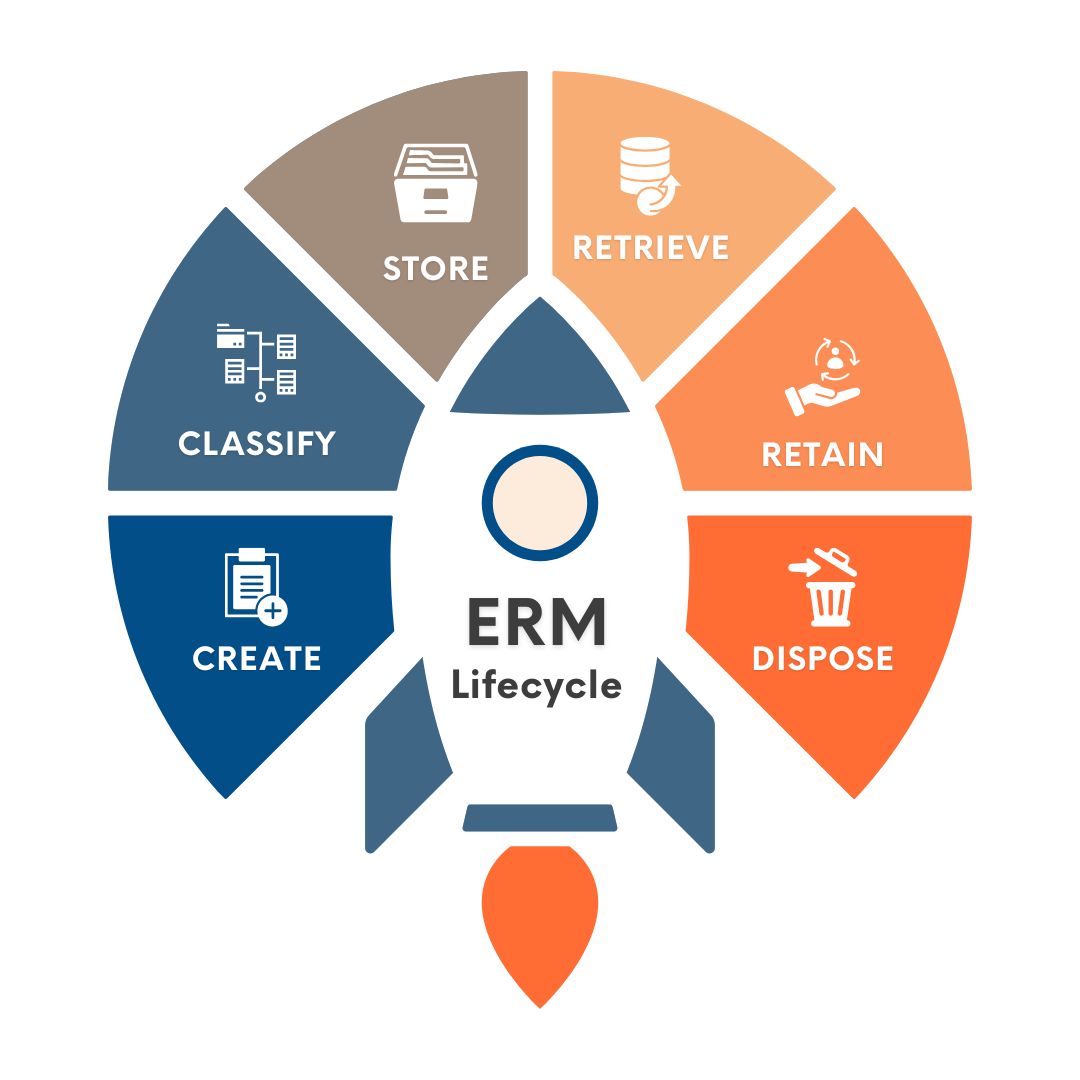
The ERM Lifecycle
Every record goes through six stages:
ERM ensures every stage happens consistently — not by chance.
Check Out Our Ultimate Checklist for Choosing an ERM System
Attached at the end of this post….
What is an Electronic Records Management System?
An Electronic Records Management System (ERMS) is software that puts ERM into practice — automatically handling how your organization captures, stores, retrieves, and disposes of digital records according to your compliance and business policies. Unlike traditional records management of physical records, ERM ensures your company has the records it requires, exactly when it requires them.
It captures records as part of a digital business process — preserving original digital records, not paper copies piling up in boxes. This creates efficiencies through better automation, accurate auditing, and reliable records scheduling.
What does an ERM system actually do?
An automated records management system covers the full records journey:
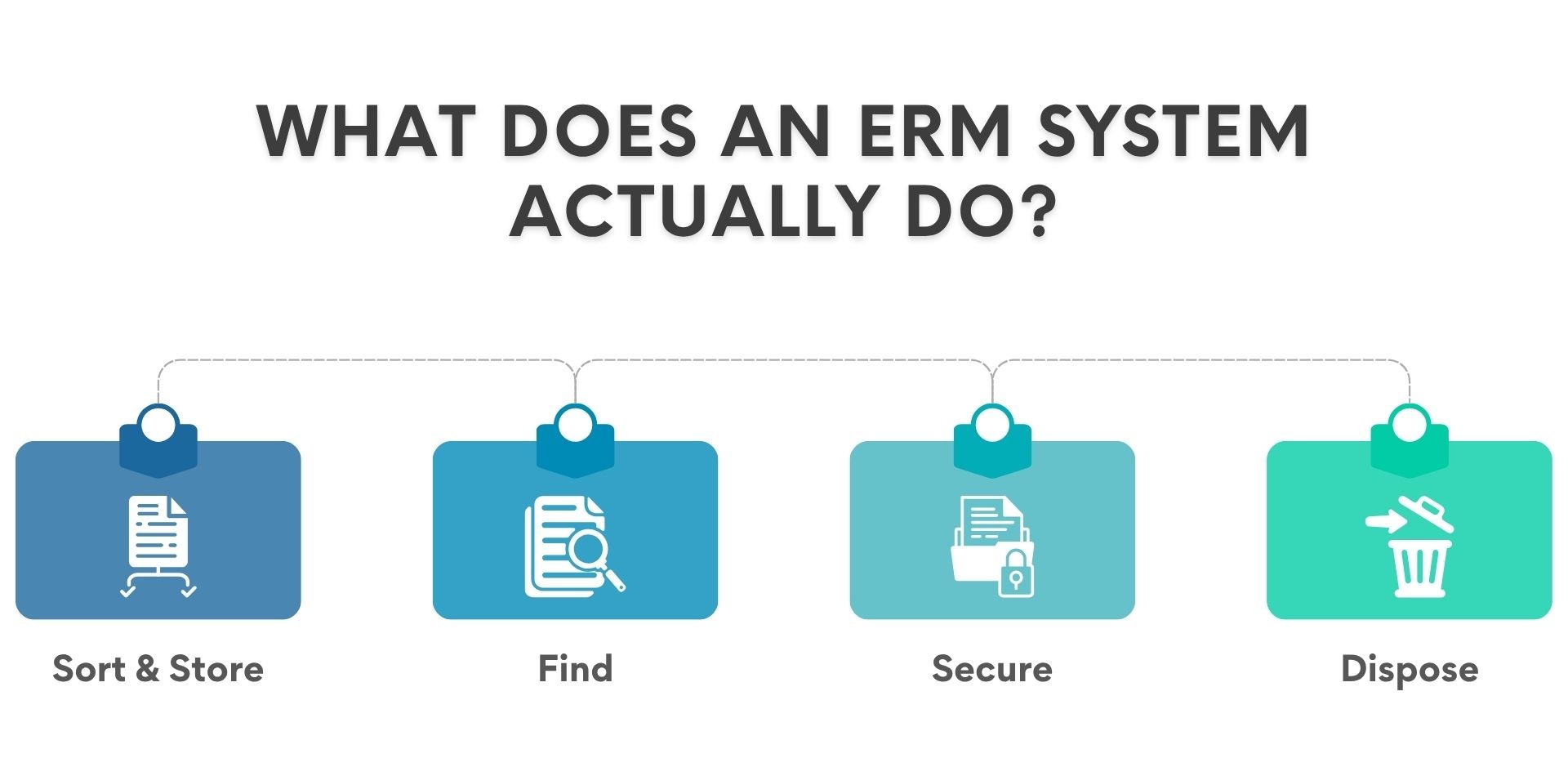
To make this happen, it combines technology with defined policies and procedures — keeping data secure, easy to find, and fully compliant with legal requirements.
The result?
With a system like Docupile, your company replaces outdated manual record-keeping with a sleek, user-friendly digital system that needs no effort to search, backup, and secure — giving you complete control over your documentation.
Why companies need an ERM?
In today’s digital age, companies are drowning in a sea of electronic records. Contracts, invoices, emails, and reports pile up, creating chaos and hindering productivity. This is where electronic records management (ERM) System comes in, acting as a life preserver for companies drowning in information overload.
ERM systems offer a multitude of benefits that translate to a healthier bottom line:
So, why do companies need ERM? It’s simple – it’s the difference between swimming with sharks (paper records) and cruising on a yacht (digital records). It’s about reclaiming control, optimizing workflows, protecting data, and ultimately, staying afloat in the ever-growing ocean of information.
Types of Electronic Records Management System Software?
Businesses also use different tools to manage their digital stuff, especially important records.There are a few main types, like EDRMS for complete records and document management, Document Management Systems (DMS) for electronic documents, Content Management Systems (CMS) for all sorts of stuff, Email Management Systems for emails, and Records and Information Management (RIM) Software for organizing everything.
Let’s check out what each of these does and why they’re handy for businesses.
1. EDRMS (Electronic Document and Records Management System):
2. Document Management Systems (DMS):
3. Email Management Systems:
Advantages of Automated Records Management System:

Electronic records management software is super important for modernizing how companies handle digital data. Some people worry it might make things more complicated or expensive, but when you team it up with other digital organization tools, it actually brings lots of benefits.
Imagine you’re dealing with digital documents. It helps you automatically collect important info about them, which makes finding and using them easier. It also helps keep track of any changes and who gets to see them. Plus, it’s a time-saver for finding stuff quickly when you need it.
It also helps with searching for specific documents in a big digital pile. And when it’s time to get rid of old documents, it makes sure they’re properly destroyed.
Another cool thing is that it helps organizations follow the rules and stay on the right side of the law. So, they can focus on what they do best while an ERM system like Docupile takes care of the digital paperwork.
Additionally, some quick points to understand the importance of ERM:
What Capabilities Should an ERM System Have?
Electronic records management systems have been around since the late ’90s and were initially meant to work with document management systems. Over time, they evolved to adapt to the digital age.
Also, traditional approaches simply digitized paper-based data management, missing out on the benefits of digital data. Modern electronic file management software recognize that digital documents are scattered across various sources like SharePoint, email, and data stores. They automatically organize and retrieve records, making them easily accessible, no matter where they’re stored.
Finally, these modern document management systems go beyond managing records; they offer real-time tracking, providing snapshots of what’s happening in the organization and how it impacts business processes. Electronic record keeping system are like digital wizards that help businesses make sense of their information and use it effectively.
Following are its Key Features:
Factors to Consider When Selecting an ERM System:
When you’re choosing an electronic records management software for your company, there are two important things to think about: how much risk your organization faces and how advanced your information management systems are. These factors are connected but give you different insights to help you make the right decision.
Firstly, let’s talk about risk. You need to check how your records are being handled right now. Are they already organized in a management system? Imagine if something happened and you needed to find your records quickly. Storing them on people’s computers and sharing them through email can be risky.
Additionally, let’s look at how advanced your information systems are. Mature organizations make sure all their tech works together smoothly, which helps the company run better. But if you’re only using email and basic financial tools, you might not be taking full advantage of what’s possible.
Hence, by considering these two things, you can figure out if you need an automated electronic records management software that collects all your records in one place or one that helps manage them where they are now.
Checklist of important factors to consider when choosing an ERM:
Docupile – The Ultimate Electronic Records Management System
Docupile is an advanced automated records management and workflow automation system, designed to simplify document handling through innovative features like full-text search, high-level security, and AI-powered automation. Here’s a brief look at its key capabilities:
Conclusion
To conclude, an Automated Records Management System (ARMS) is like a super-smart organizer for a company’s digital files and documents. It keeps everything in order, safe, and easy to find from the moment they’re created until they’re not needed anymore.
Furthermore, there are different types of electronic record keeping system systems, each with its own specialties, like managing documents, all kinds of content, or emails. They come with cool features like tagging files, setting rules, and making sure only the right people can access them.
When picking an electronic records management software, organizations need to think about how much risk they’re facing and how tech-savvy they are. That way, they can choose the right one that fits their needs and helps them stay organized in the digital world.