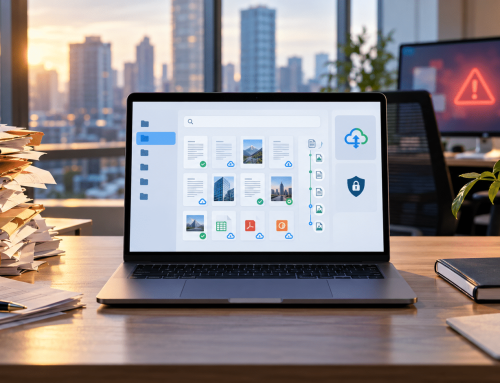

Google Drive vs DMS becomes important when shared folders no longer provide a clear view of dealership documents.
Auto dealerships use Google Drive to store spreadsheets, scanned paperwork, customer files, and internal documents. It is familiar, easy to access, and useful for everyday collaboration.
The question is not whether Google Drive can store dealership documents. It can.
The real question in the Google Drive vs document management system comparison is whether shared folders provide enough control once the dealership needs to track complete deal jackets, find scanned records quickly, manage employee access, and follow repeatable document processes.
Google Drive is primarily a cloud storage and collaboration platform. A document management system is designed to organize, track, secure, and manage documents through a structured process.
Want to Learn More?
Check Out: How Electronic DMS for Accounting Firms Helps Accounting Team
Google Drive vs DMS: The Main Difference
Google Drive works well when a dealership needs a shared place for documents, spreadsheets, and team collaboration. A DMS becomes more useful when those files must follow a repeatable process.
Capability
| Capability | Google Drive | Document Management System |
|---|---|---|
| Cloud file storage | Core capability | Core capability |
| File organization | Mainly folder-based | Can use metadata, document types, folders, and automation |
| Deal jacket completeness | Usually checked manually or with a separate tracker | Can support checklists and status tracking |
| Missing-document visibility | Requires a manual process or customization | Can surface incomplete records |
| Search | File names, content, filters, and Workspace search tools | OCR, metadata, document type, and structured search |
| Access management | User, group, file, and folder sharing | Role-based and process-specific permissions |
| Workflow automation | Available through integrations or configuration | Often built around document workflows |
| Renewal tracking | Usually managed through Calendar, Sheets, or another process | Can support metadata-driven alerts |
| Activity history | General file activity and administrative reporting | Document-focused activity and audit history |
Still Managing Deal Documents Through Shared Folders?
See how dealerships add document tracking, deal jacket visibility, and controlled access without replacing their current systems.
When Google Drive Works Well
Google Drive may be enough when a dealership has a small team, manageable document volume, and clear rules for naming and storing files.
It works especially well when:
- Employees mainly need storage and sharing
- Folders are simple and consistently used
- Staff follow the same file-naming method
- Managers can check documents manually
- Deadlines are tracked reliably elsewhere
For general office files, spreadsheets, marketing assets, and internal collaboration, Google Drive can remain a practical choice.
When Shared Folders Stop Being Enough?
Consider one vehicle sale. The salesperson collects customer identification and initial paperwork. The F&I team adds financing documents, signed disclosures, and optional product agreements. Office staff later add title, registration, insurance, trade-in, and delivery records.
All those files may be saved in one folder, but the folder may not show whether the deal jacket is complete, which form is missing, whether the latest version is present, or who must follow up.
Someone still has to open the folder, compare its contents with a checklist, and contact the right person.
This is where the Google Drive vs DMS decision becomes more practical. The problem is not storage. It is visibility into the process around the documents.
Dealerships that need more than manual folder checks can use [deal jacket completeness tracking] to see what has been received and what is still missing.
How Do You Know It Is Time for a DMS?
A dealership may need a document management system when:
- Missing paperwork is regularly discovered late.
- Managers must open every folder to verify completeness.
- Employees use inconsistent file names or storage locations.
- Scanned records are hard to find without the exact file name.
- Vendor renewals, approvals, or follow-ups are tracked separately.
A DMS does not need to replace Google Drive. It adds structure where manual document processes are becoming harder to manage.
The right Google Drive vs DMS choice depends on whether the dealership needs simple file sharing or a more consistent way to manage document status, access, and follow-up.
How Docupile Fits Into the Process?
Google Drive can continue supporting everyday collaboration, spreadsheets, and shared working files.
As document volumes grow, Docupile adds the structure dealerships often need. It helps organize transaction records, track deal jacket completeness, search scanned files through OCR and metadata, control access by role, review document activity, automate workflows, and monitor vendor-contract dates.
Docupile works alongside the dealership’s dealer management, CRM, accounting, sales, and collaboration systems rather than replacing them.
Explore how [automotive document management software] can support deal jackets, document retrieval, access control, and vendor-contract tracking.
Google Drive vs DMS: Which Should You Choose?
Google Drive vs DMS is not always an either-or decision.
Google Drive remains a practical option for storing and sharing dealership documents.
But when staff spend more time checking paperwork than moving deals forward, the challenge is no longer storage. It is document management.
A DMS can make the biggest difference when the dealership needs complete records, clearer status, stronger search, controlled access, and consistent workflows. In many cases, Google Drive vs DMS can serve different purposes within the same dealership.
Need More Control Than Shared Folders Provide?
See how Docupile helps independent dealerships organize deal documents, monitor missing paperwork, control document access, and retrieve records faster.