
The Incident That Exposed the Problem
The problem surfaced on one of Avenstruct Construction Group’s active commercial projects. Two site teams had been working from different revisions of the same structural drawing.
One team had received the revised drawing through email. Another supervisor was still using a copy previously downloaded to a site laptop. By the time the discrepancy was identified, part of the work had already been completed.
The result was rework, additional coordination, and an uncomfortable question for the operations team:
How many other project documents were being managed the same way?
The drawing itself was not missing.
The problem was that Avencrest could not immediately establish one trusted location where every team member could identify the current approved version.
And once management started looking more closely, the issue turned out to be much larger than one drawing.
The Problem Was Bigger Than One Drawing
Avencrest had grown across projects and locations faster than its document processes had grown with it.
Each project team had developed its own habits.
Project managers relied heavily on email. Site supervisors downloaded drawings and specifications for quick access. Some contracts and change-order backup were stored in departmental drives. Subcontractor documentation often remained attached to individual email threads.
That created several construction-specific problems.
Revised drawings did not always replace working copies
When a new drawing revision was issued, there was no consistent way to ensure that every previously downloaded copy was clearly recognized as outdated.
A superintendent looking at a saved PDF could not always tell whether a newer approved revision had already been circulated.
Submittal history was difficult to reconstruct
- A subcontractor might email a product submittal to the project manager.
- Comments could come back from the architect in another email thread.
- A revised submission might then be sent several days later.
The individual files existed, but reconstructing the sequence of submitted → reviewed → revised → approved required digging through inboxes and folders.
Change-order documentation was fragmented
Pricing, field notes, scope changes, supporting photographs, approvals, and the final change order were not always stored together.
If a question arose months later, the team could usually locate pieces of the history — but not necessarily the entire decision trail in one place.
Site documentation depended too heavily on individuals
Inspection records, field photographs, toolbox-talk documentation, subcontractor certificates, and equipment records were often organized according to the person responsible for collecting them.
That meant project knowledge was partly tied to individual working habits rather than to a consistent company record.
This was no longer simply a filing problem.
It had become a document management for contractors challenge affecting project execution, handoffs, access, and accountability.
A Compliance Review Made the Risk Impossible to Ignore
A scheduled multi-site safety and compliance review gave Avencrest another reason to examine its document controls.
The operations team needed to assemble records from all four active projects, including:
- safety inspection documentation,
- toolbox-talk records,
- incident documentation,
- subcontractor certifications,
- equipment maintenance records,
- project approvals,
- and supporting project documentation.
Previously, preparing this material meant contacting project managers individually, searching shared folders, reviewing email attachments, and checking site-level storage.
The preparation process took more than three weeks.
Even then, the team had to spend additional time confirming whether certain records were missing or simply stored somewhere they had not yet checked.
Management realized the larger issue:
The company had the documents, but it did not always have control over the record.
What Avencrest Changed With Docupile?
Avencrest implemented Docupile to establish a more consistent approach to document management for contractors across all active projects.
The goal was not simply to move files into another cloud location.
The goal was to establish a clear project record that teams could rely on.
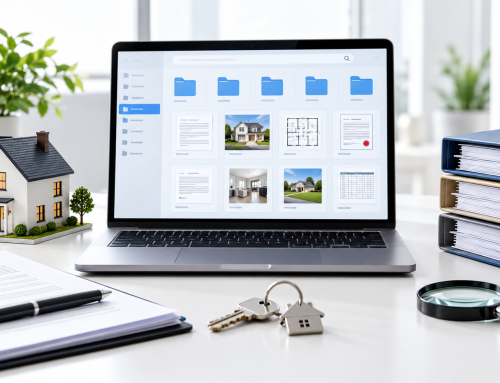
- Each project received one structured document record
Drawings, specifications, RFIs, submittals, contracts, change orders, safety records, inspection documentation, and subcontractor records were brought into project-based structures.
Instead of asking which employee had a document, teams could begin with the project itself.
Documents could also be classified by type, project, and other relevant information so records were easier to locate without relying entirely on filenames.
- Drawing revisions became easier to distinguish
When an updated drawing was added, the earlier version remained available as part of the document history.
But it was no longer necessary for site staff to compare email dates or filenames such as:
Structural_Final.pdf
Structural_Final_Rev2.pdf
Structural_Final_Rev2_NEW.pdf
The current working version could be identified while previous revisions remained available for reference.
That changed how site teams handled one of the problems that had triggered the project in the first place.
Supervisors could check the controlled project record before relying on a locally saved copy.
- RFIs and submittals stayed connected to their history
Avencrest also changed how project correspondence became part of the record.
Rather than allowing important approvals and revised files to remain buried in email, the relevant documents could be stored with the project documentation.
For a submittal, for example, the project team could retain the original submission, subsequent revision, supporting documentation, and approved version as part of the same project history.
The same principle applied to RFIs and other approval-driven documents.
The objective was simple:
Someone taking over the project should be able to understand what happened without reconstructing it from another employee’s inbox.
- Access followed the project role
Not everyone working on a construction project needs access to everything.
- Avencrest configured document access around responsibilities.
- Project managers could work with the broader project record.
- Site supervisors could access the drawings, specifications, field documentation, and other records relevant to their work.
- Subcontractors could be limited to the documents needed for their scope rather than receiving broad access to the entire project file.
- When a subcontractor’s involvement ended, its document access could be removed without changing access for the rest of the project team.
This also gave the operations team better visibility into an issue it had previously handled inconsistently:
Who still had access to each project after their work was finished?
- Document activity became part of the record
Avencrest no longer had to depend solely on memory when questions arose around a document.
Document activity could be tracked through an audit history showing actions associated with the record.
That gave project and operations teams a clearer way to review how documents changed over time rather than piecing together the sequence from emails and local files.
For a construction company managing multiple sites simultaneously, that visibility mattered as much as storage itself.
The Results
Fewer questions about which drawing was current
During the six-month review period following implementation, Avencrest did not record another documented incident in which two site teams unknowingly worked from conflicting revisions of the same controlled drawing.
The earlier rework incident became part of the company’s internal project-document training.
The lesson was straightforward:
Before using a drawing, verify the controlled project version.
Compliance-document preparation fell from weeks to days
For the next multi-site review, the operations team did not begin by emailing every project manager asking them to assemble records.
The requested documentation was retrieved from the relevant project records.
Preparation that had previously taken more than three weeks was reduced to under two working days.
More importantly, the team spent less time trying to determine whether a document was actually missing or simply stored somewhere unexpected.
Project handoffs became less dependent on individual employees
When project responsibilities changed, the incoming team could review the project record rather than relying almost entirely on the outgoing employee’s folders and inbox.
RFIs, drawing revisions, submittals, change-order documentation, and supporting project records remained associated with the project.
That reduced one of Avencrest’s biggest hidden operational risks:
the person managing the project was no longer part of the filing system.
Access became easier to review
Operations staff gained clearer visibility into which users had access to project documentation.
Subcontractor access could be reviewed as scopes were completed, and former project participants no longer needed to remain connected to active project records simply because nobody had revisited an old shared folder.
This brought document access into the project closeout process instead of treating it as a separate IT task.
What Changed Most?
The biggest change at Avencrest was not that documents moved from one storage location to another.
It was that the company established a clearer answer to four questions:
- Which document is current?
- Where is the complete project record?
- Who is allowed to access it?
- Can we see what happened to it over time?
For a contractor operating across several sites and coordinating employees, subcontractors, architects, vendors, and owners, those answers directly affect how confidently work moves forward.
Related Articles
In Their Own Words
“The drawing issue made us realize we were relying too much on individual people to keep project records straight. Once we looked deeper, we found the same problem in submittals, change orders and compliance documentation. With Docupile, the project record stays with the project. Our teams know where to look, which version they should be using and who has access to it.”
— Robert M, Operations Director,
Avenstruct Construction Group
Is Your Document Control Process Built Around the Project — or the Person?
When drawings, RFIs, submittals, change orders, safety records, and subcontractor documents depend on individual inboxes and site storage, the problem can remain invisible until a revision is missed, a project changes hands, or documentation is requested under pressure.
Docupile supports document management for contractors by bringing project documents into a controlled, searchable environment with clearer versions, access, document history, and accountability.
See how Docupile can support document control across your construction projects.